Quay Wall Construction Techniques for Soft Soils
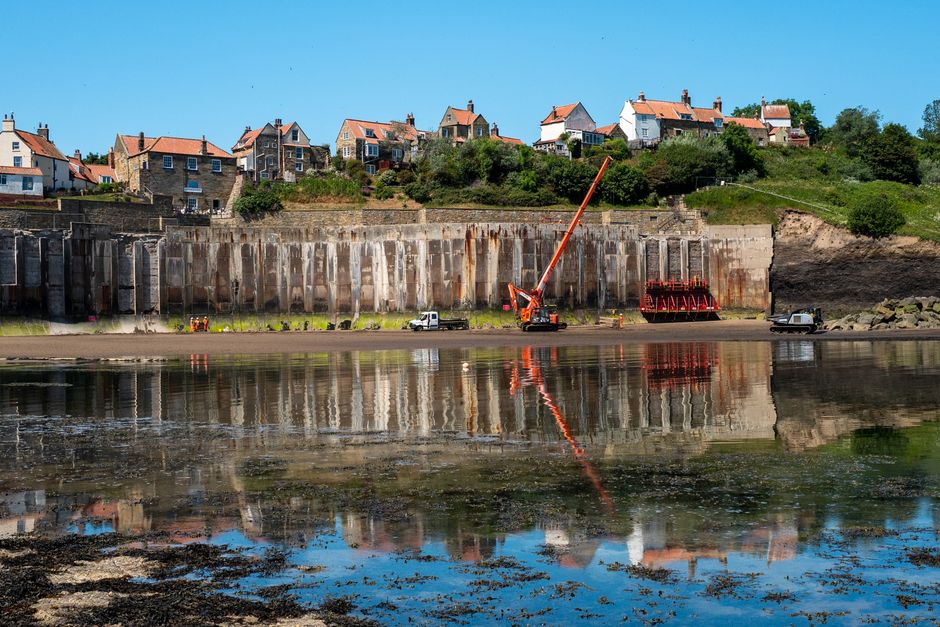
Constructing quay walls on soft soils presents distinct geotechnical challenges that require careful planning and specialised techniques. Soft clay and silt deposits are common in estuarine and coastal areas, where they can extend to considerable depths. These soils are characterised by low shear strength, high compressibility, and sensitivity to disturbance, which can lead to excessive settlement, lateral movement, and instability if not properly addressed. The selection of appropriate construction methods is therefore critical to ensuring the long-term performance and safety of port and harbour infrastructure.
This article explores various techniques for building stable quay walls on soft ground, focusing on pile foundations and ground improvement solutions. It outlines the key considerations that inform method selection, the principles behind each approach, and the conditions under which they may be suitable. The discussion is intended to provide a neutral overview for engineers, planners, and stakeholders involved in marine construction projects, particularly in the United Kingdom context where soft alluvial deposits are prevalent.
By understanding the behaviour of soft soils and the available construction options, project teams can make informed decisions that balance technical feasibility, cost, and environmental impact. The following sections describe common foundation and improvement techniques, along with their applications and limitations.
Understanding Soft Soil Behaviour and Site Characterisation
Soft soils, such as normally consolidated clays and silts, exhibit low undrained shear strength and high compressibility. When subjected to loads from quay walls, these soils may undergo significant consolidation settlement over time, potentially leading to differential movements and structural distress. Additionally, lateral pressures from retained soil and water can cause bearing capacity failures or excessive deflections if the wall is not adequately supported. Therefore, a thorough site investigation is essential to determine soil stratigraphy, strength parameters, compressibility characteristics, and groundwater conditions.
Site characterisation typically involves boreholes, cone penetration tests, and laboratory testing to establish design parameters. In the UK, guidelines such as those from the Institution of Civil Engineers and the British Standards provide frameworks for geotechnical assessment. The presence of soft layers, their thickness, and depth to firmer strata influence the choice between shallow and deep foundation solutions. Furthermore, the sensitivity of soft clays to remoulding during construction must be considered, as disturbance can significantly reduce strength.
Numerical analysis and empirical methods are often used to predict wall deflections, settlement, and stability. These analyses help engineers evaluate the feasibility of different construction techniques and identify potential risks. It is important to note that actual performance depends on multiple factors, including construction sequence, workmanship, and long-term environmental changes. Thus, a robust monitoring plan is advisable to verify design assumptions during and after construction.
Pile Foundation Solutions for Quay Walls
Pile foundations are widely used to support quay walls on soft soils, transferring loads to deeper, more competent strata. Several pile types and configurations are available, each with specific advantages and limitations. The choice depends on soil conditions, load requirements, and construction constraints.
Common pile foundation options include:
- Driven tubular piles: These are often used in port construction due to their high load capacity and ability to penetrate soft soils. They can be installed in clusters or as a contiguous wall, providing both vertical support and lateral resistance.
- Bored piles: Suitable where noise and vibration must be minimised, bored piles are constructed by drilling and concreting. They can be designed with large diameters to accommodate heavy loads.
- Sheet pile walls: Although not strictly a pile foundation, sheet piles are interlocking sections driven into the ground to form a continuous wall. They resist lateral earth pressures and can be combined with tie-backs or anchors for stability.
- Micro-piles: These are small-diameter piles that can be installed in restricted access areas. They are often used for underpinning or where ground conditions are difficult.
In soft soil conditions, piles must be designed to resist downdrag (negative skin friction) caused by settling soil. This can reduce the effective load capacity and requires careful consideration in design. Additionally, pile installation may cause ground heave or lateral displacement, which can affect nearby structures. Therefore, installation methods and sequences should be planned to minimise adverse effects.
For quay walls, piles are typically combined with a capping beam or concrete deck to distribute loads and provide a working platform. The connection between the wall and the piles must be designed to transfer lateral forces effectively. In some cases, raking piles are used to enhance lateral resistance. Overall, pile foundations offer a reliable solution for soft soils, but their design and construction require specialist expertise and thorough testing.
Ground Improvement Techniques
Ground improvement methods aim to enhance the engineering properties of soft soils in situ, reducing settlement and increasing bearing capacity. These techniques can be used alone or in combination with pile foundations to achieve the required performance.
Several ground improvement solutions are applicable to quay wall construction:
- Vertical drains: Installing prefabricated vertical drains (PVDs) accelerates consolidation by shortening drainage paths. This can reduce long-term settlement and increase soil strength over time. However, the rate of improvement depends on soil permeability and load application.
- Deep soil mixing: This involves mixing cement or lime with soft soil to create columns or blocks of improved material. The resulting composite ground has higher strength and lower compressibility. Deep soil mixing can be used to form retaining structures or to support quay walls.
- Stone columns: Granular columns are installed by vibrating stone into the ground, reinforcing the soil and providing drainage. They increase bearing capacity and reduce settlement, but their effectiveness in very soft clays may be limited.
- Dynamic compaction: This technique involves dropping heavy weights onto the ground to densify loose granular soils. It is less effective in saturated clays due to pore water pressure build-up.
- Preloading: Applying a temporary surcharge load to the ground before construction can pre-consolidate the soil and reduce post-construction settlement.
Each method has specific applicability and limitations. For instance, vertical drains are most effective in clays with relatively high permeability, while deep soil mixing can be used in a wide range of soils but requires careful quality control. The selection of a ground improvement technique should be based on site-specific conditions, project requirements, and environmental considerations.
In the UK, ground improvement is often regulated under environmental permitting regimes, particularly when involving additives or discharge to water. Therefore, early consultation with regulators is advisable. Coastal Marine has experience in implementing ground improvement solutions in sensitive marine environments, ensuring compliance and minimising ecological impact.
Combined and Hybrid Approaches
In many projects, a combination of pile foundations and ground improvement yields the most effective solution. For example, piles may be used to support the main wall structure, while ground improvement reduces lateral earth pressures or improves overall stability. Hybrid systems can also include anchorages, relieving platforms, or lightweight backfill to reduce loads on the soft soil.
Another approach is the use of a relieving platform, which is a structural slab supported on piles that carries the backfill load, thereby reducing the pressure on the quay wall and the soft soil behind it. This can be particularly useful in deep soft deposits where conventional anchored walls would be impractical. The design of such systems requires careful analysis of soil-structure interaction and construction sequencing.
It is important to recognise that no single technique is universally applicable. The choice depends on factors such as soil profile, water depth, wall height, seismic considerations, and project budget. A thorough options appraisal, often involving geotechnical finite element analysis, can help identify the most suitable combination. Monitoring during construction, such as inclinometers and settlement plates, provides valuable data to validate design assumptions and allow for adjustments if needed.
Design and Construction Considerations
Designing quay walls on soft soils requires a comprehensive understanding of both short-term and long-term behaviour. Short-term stability during construction must be ensured, particularly when excavation or dredging is involved. Long-term settlement and lateral movements must be within tolerable limits for the intended use. Factors such as corrosion, scour, and ship impact should also be addressed in the design.
Construction sequencing is critical. For instance, installing piles before dredging may reduce disturbance to the seabed, while preloading may need to be carried out in stages to avoid instability. Quality control during construction, including pile integrity testing and monitoring of ground movements, helps ensure that the works proceed as planned. In the UK, projects must also comply with health and safety regulations and environmental protection requirements.
Finally, it is essential to consider the whole-life performance of the quay wall. Maintenance and inspection regimes should be established to detect any signs of distress early. The responsibility for outcomes is shared among the project team, and no single party can guarantee performance without considering the inherent variability of soft soils and the influence of external factors such as climate change and vessel loading.
By adopting a systematic and informed approach, engineers can successfully construct quay walls on soft soils using appropriate techniques. The methods described here provide a foundation for decision-making, but each project requires site-specific design and construction planning.